In the era of digital transformation, enterprises are increasingly adopting a wide range of SaaS (Software as a Service) applications such as CRM, ERP, HRM systems, and marketing tools. However, without proper integration, these systems can easily become siloed, leading to data fragmentation and reduced operational efficiency.
SaaS integration serves as a critical enabler that allows organizations to seamlessly connect cloud-based applications with internal systems, ensuring smooth data flow, process optimization, and enhanced overall business performance.
SaaS Integration Technology Solutions for Enterprise Connectivity in the Digital Era. Source: Magenest
Why Do Enterprises Need SaaS Integration?
SaaS Trends in 2026
Software as a Service (SaaS) has become the default delivery model across most enterprise departments. Typical platforms include:
CRM: Salesforce, HubSpot, Zoho CRM
ERP: SAP S/4HANA Cloud, Oracle Fusion, NetSuite
HRM / HCM: Workday, BambooHR, SuccessFactors
Marketing / Customer Support: Adobe Marketo, Mailchimp, Zendesk, Intercom
E-commerce & Payments: Shopify, BigCommerce, Stripe
Enterprises typically use multiple SaaS applications simultaneously to support specialized business functions. As a result, integrating these SaaS platforms with each other and with on-premises or legacy systems has become essential to ensure seamless data flow and smooth end-to-end business processes.
Challenges of Not Integrating SaaS
Data silos: Customer information is scattered across CRM, customer support, and marketing platforms. Without a single source of truth, reporting becomes inconsistent and unreliable.
Manual operations: CSV exports/imports, copy-paste workflows, and ad-hoc scripts increase human error, consume time, and raise the risk of data leakage.
Inaccurate reporting: Lack of real-time synchronization leads to decisions based on outdated data, slowing market response.
Inconsistent customer experience: Orders, complaints, and transaction histories are not synchronized across online and offline channels.
Higher operational costs: Disconnected tools require separate administration, maintenance, and access control, increasing overhead.
Benefits of SaaS Integration
Centralized and standardized data: Establish a unified data model and enable a Customer 360° view, making real-time dashboards and analytics easier to build.
Optimized internal processes: Automate cross-department workflows (e.g., deal closed in CRM → order created in ERP → customer engagement triggered in marketing systems).
Enhanced customer experience: Synchronized information enables faster responses, deeper personalization, and reduced repetitive inquiries.
Data-driven decision making: Consolidate sales, inventory, marketing, and financial data to improve demand forecasting, inventory optimization, and conversion rates.
Stronger security and governance: Apply centralized IAM policies, unified logging, and end-to-end access monitoring instead of fragmented controls per tool.
Long-term cost reduction: Fewer manual tasks, reduced errors, and elimination of redundant licenses through streamlined and rationalized processes.
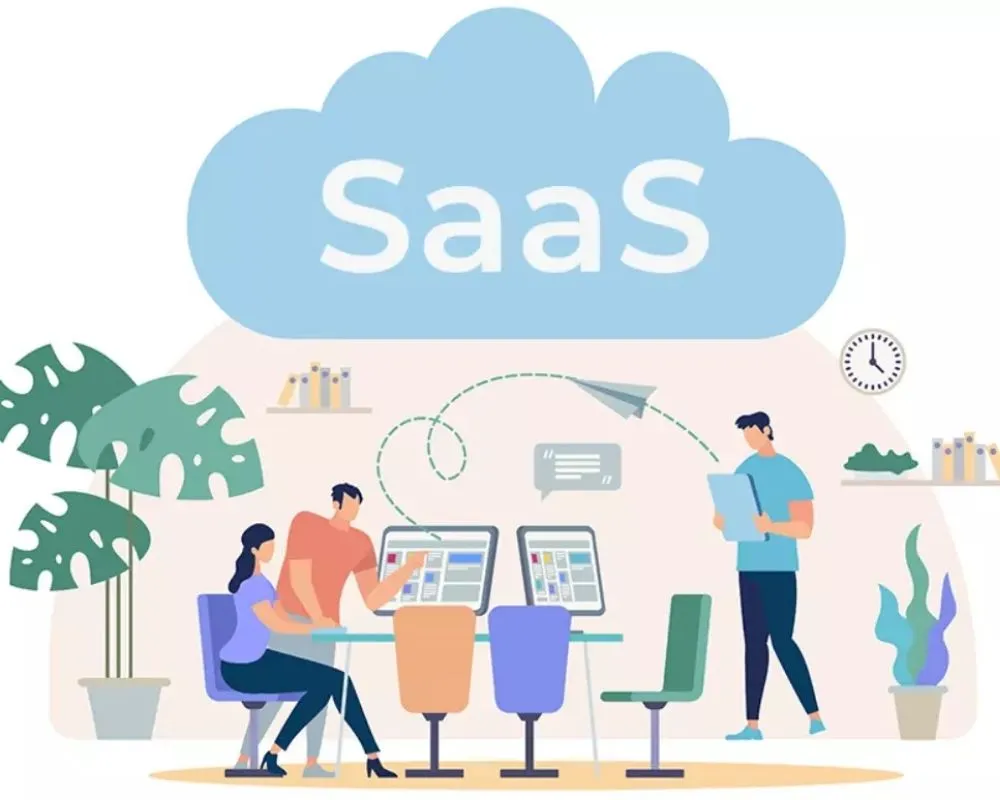
Key Reasons Why SaaS Technology Has Become Popular and Business-Critical. Source: Magenest
Common SaaS Integration Approaches
Enterprises typically follow three primary integration paths: API Integration, iPaaS, and Middleware / Custom Integration. Each approach differs in scope, cost, scalability, and flexibility.
API Integration (REST / GraphQL, Webhooks)
Direct system-to-system integration using public APIs provided by SaaS vendors.
Typical technologies
REST, GraphQL, gRPC
Webhooks for real-time event delivery
OAuth 2.0 / OpenID Connect for authorization
Payload signing (HMAC) for secure message validation
When to use
Clear integration requirements with a manageable number of systems
Need for high performance, fine-grained control, and optimized platform cost
Best practices
Design for idempotency to prevent duplication during retries
Implement rate limiting, exponential backoff, and circuit breakers
Version schemas and continuously track vendor API changes
Enable distributed logging and tracing (e.g., OpenTelemetry) for end-to-end observability
iPaaS (Integration Platform as a Service)
A managed integration layer offering hundreds of pre-built connectors.
Representative platforms
MuleSoft
Dell Boomi
Azure Logic Apps
Workato
Zapier (SMB-focused)
Make
Key capabilities
Low-code / no-code connectors, data mapping, and transformation
Workflow orchestration, scheduling, queues, retries
Built-in monitoring, alerting, and data lineage
Integrated security: secrets vault, data masking, RBAC, audit logs
When to use
Rapid integration across many systems with minimal custom code
Frequent changes and need for centralized governance
Considerations
Licensing costs based on flows or task volume
Risk of workflow sprawl if governance is weak
Performance limitations at very high throughput without careful design
Middleware / Custom Integration
Building a dedicated integration layer (on-premises or cloud-native) for maximum flexibility and scalability.
Typical technologies
Message brokers / event streaming: Apache Kafka, RabbitMQ, AWS SNS/SQS, Google Pub/Sub
ESB / integration frameworks: Apache Camel, WSO2, Spring Integration
Data pipelines & streaming ETL/ELT: CDC pipelines with Debezium, near-real-time processing using Apache Spark or Apache Flink
When to use
Large-scale environments with complex domain logic
Real-time, event-driven integration requirements
Heavy reliance on legacy systems not supported by iPaaS connectors
Best practices
Event-driven architecture with schema registry and well-defined API contracts
End-to-end security: encryption in transit and at rest, centralized secrets management
Strong observability: metrics, logs, traces, and clearly defined SLOs / SLAs for integration flows
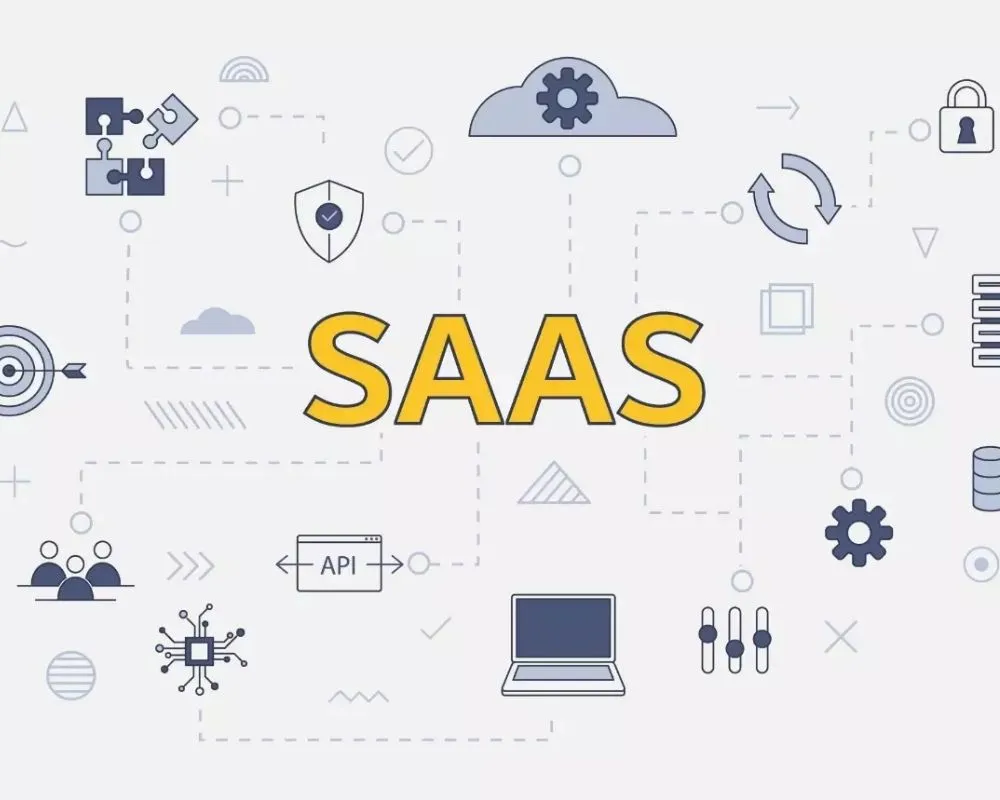
Common Models for Adopting SaaS Technology Today. Source: Magenest
Quick Comparison
| Criteria | API Integration | iPaaS | Middleware / Custom |
|---|---|---|---|
| Deployment speed | Medium (requires development) | Fast (prebuilt connectors) | Slower initially |
| Flexibility | High | Medium–High | Very High |
| Initial cost | Low–Medium | Low (usage-based licensing) | Medium–High |
| Operational cost | Requires Dev/Ops team | Centralized on platform | Requires specialized team |
| Scalability | High with good design | Good, plan-dependent | Very High (event-driven architecture) |
| Best fit | Clear use cases, few systems | Many systems, rapid rollout | Large scale, complex logic |
Model Selection by Context
SMB / Scale-up: Prioritize iPaaS for rapid go-live; complement with a few custom APIs where gaps exist.
Mid-sized enterprises: Adopt hybrid integration — iPaaS as the governance core, with custom API integrations for critical flows to optimize cost and performance.
Large enterprises / real-time requirements: Use event-driven architecture with custom middleware, complemented by iPaaS for non-critical and back-office integrations.
Common Architecture Patterns
Point-to-point: Fast to implement, but hard to scale and maintain.
Hub-and-spoke (ESB / iPaaS): Centralized governance, improved observability, and easier connector expansion.
Event-driven: Low latency, loosely coupled (decoupled), and highly scalable across business domains.
Security & Operations Considerations
Use standard authentication and authorization mechanisms (OAuth 2.0, mTLS); ensure secure secrets management (Vault, KMS).
Apply DLP policies and data masking for sensitive data; ensure compliance with regulations such as GDPR and HIPAA (industry-dependent).
Define SLA/SLOs, implement retry mechanisms, dead-letter queues, and proactive alerting.
Maintain strong documentation and change management (versioning) to minimize integration breakage when SaaS providers update APIs.
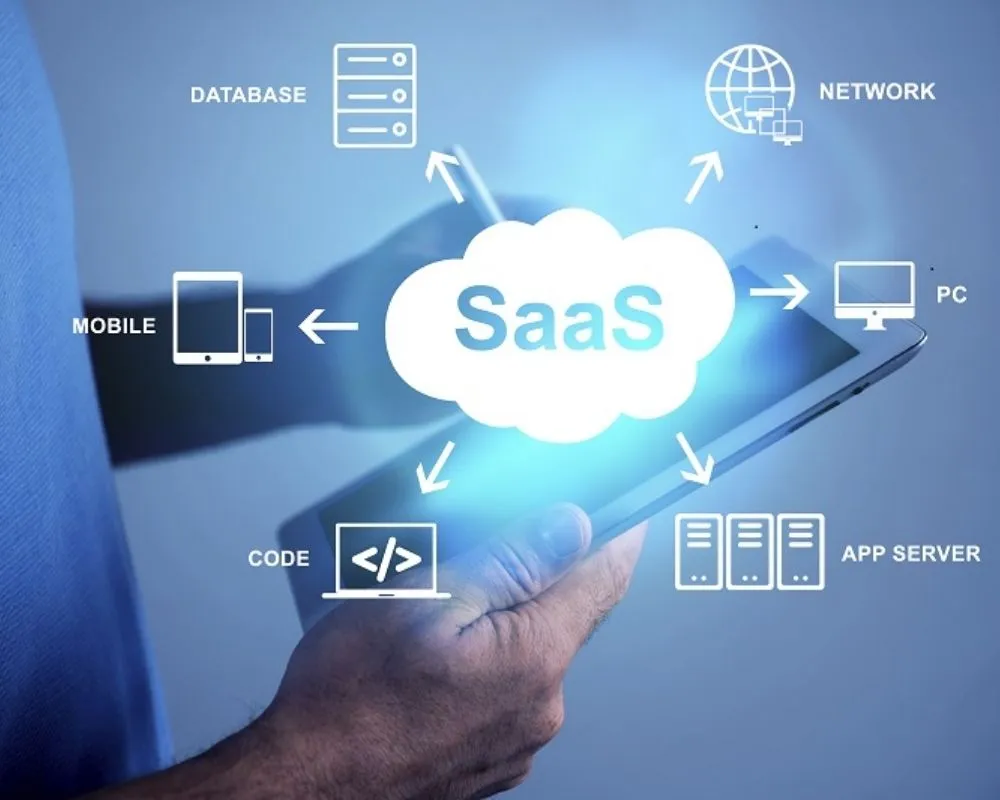
Quick Comparison of SaaS Solutions and Key Considerations. Source: Funix Edu
Challenges in SaaS Integration and How to Address Them
When integrating multiple SaaS applications with internal systems (ERP, CRM, HRM, WMS, etc.), enterprises typically face four major categories of challenges: data security, synchronization speed and data flow, cost and technical complexity, and change management. Below, each challenge is analyzed in terms of root causes, impacts, and practical mitigation strategies.
Data Security & Privacy
Challenges
Sensitive data (PII, payment card data, HR records) traverses multiple platforms, significantly increasing the attack surface.
API keys, access tokens, and credentials may be exposed due to poor secrets management.
Multi-tenant SaaS environments store data on third-party infrastructure, requiring strong data governance and control.
Compliance requirements such as data residency laws, GDPR, PCI-DSS, HIPAA, etc.
Impact: Data breaches, regulatory fines, loss of customer trust, and serious financial and reputational damage.
Mitigation Strategies & Best Practices
End-to-end encryption: Use TLS 1.2/1.3 for data in transit; apply customer-managed keys (CMK) for data at rest where supported.
Centralized secrets management: Use HashiCorp Vault, AWS KMS, or Azure Key Vault; enforce regular key/token rotation.
Strong authentication & authorization:
OAuth 2.0 + OpenID Connect for SaaS integrations
mTLS for machine-to-machine communication
RBAC and the principle of least privilege
Data masking and tokenization for test and development environments; implement DLP controls to prevent data leakage.
Contracts and SLAs: Require SaaS providers to commit to security controls, data location, backup retention, and incident response.
Audit logging and SIEM integration: Centralize integration logs and enable alerts via SIEM platforms (e.g., Splunk, Elastic, Datadog Security).
Penetration testing and periodic compliance audits; ensure certifications such as ISO 27001, SOC 2, or PCI DSS when applicable.
Synchronization Speed & Data Consistency (Latency & Consistency)
Challenges
Real-time synchronization at high volume introduces latency; synchronous request/response patterns are prone to timeouts.
Legacy systems may not support streaming or CDC; some business processes require transactional consistency (orders, inventory, payments).
Different SaaS platforms impose rate limits, complicating retry and throttling logic.
Impact: Stale data, degraded customer experience, double-booking, and accounting inconsistencies.
Mitigation Strategies & Architectural Patterns
Hybrid integration design (synchronous + asynchronous):
Synchronous APIs for workflows requiring immediate response (e.g., payment confirmation).
Asynchronous, event-driven flows for high-volume processes (e.g., order events to ERP/WMS).
Change Data Capture (CDC) (e.g., Debezium, AWS DMS) to stream database changes from legacy systems into Kafka or streaming platforms, avoiding heavy batch ETL.
Event streaming platforms (Kafka, Pub/Sub) with consumer groups for high throughput; implement idempotency in consumers.
Webhook + queue pattern: SaaS → webhook → message queue (SQS/Kafka) → downstream consumers scaled by capacity.
Batching, compression, and delta synchronization to reduce payload size; use backpressure and circuit breakers for system protection.
Caching and read replicas for read-heavy workloads; apply CQRS when separation of read/write models is required.
Define latency SLOs/SLA and monitor via metrics such as p99 latency and queue depth.
Key Challenges in SaaS Technology Adoption. Source: Base
Cost & Technical Complexity in SaaS Integration
Challenges
iPaaS platforms and prebuilt connectors are typically licensed based on the number of workflows or tasks; cloud data egress incurs additional costs; custom integrations with legacy systems require significant engineering effort.
Operational costs increase due to the need for DevOps teams, monitoring, backup, and incident handling.
Technical debt accumulates when integrations are designed as point-to-point “spaghetti” architectures.
Impact: Higher operational expenditure (OPEX), slower ROI realization, and prolonged project timelines.
Cost Optimization & Mitigation Strategies
Adopt a hybrid integration model: Use iPaaS for rapid workflows with ready-made connectors; leverage middleware or event streaming for core, high-volume integration flows.
Implement a canonical data model (common schema) to reduce transformation and mapping complexity.
Leverage Change Data Capture (CDC) to minimize extract-load overhead on legacy databases.
Optimize commercial and cloud costs: Negotiate licenses, use reserved capacity, right-size cloud resources, and reduce data egress through data/processing co-location.
Automate deployment and operations: Apply IaC, CI/CD pipelines, and automated testing to reduce long-term operational overhead.
Build reusable integration components (transformers, validators, error handlers) instead of coding per integration point.
Change Management & Governance
Challenges
API version changes from SaaS vendors can break integration flows; new ERP/CRM releases may introduce breaking changes.
Organizational readiness gaps: people and business processes may not adapt quickly; lack of data governance and clear data stewardship.
Absence of staging or preview environments causes issues to surface only in production.
Impact: Business disruptions, time-consuming rollbacks, unclear accountability, and audit difficulties.
Governance & Mitigation Strategies
Establish an Integration Governance Board involving data stewards, solution architects, security teams, and business owners.
Mirror production in dev/staging environments; use contract testing (e.g., Pact) to validate API compatibility early.
API gateway and façade pattern: Isolate vendor changes via a façade layer with versioning and backward-compatible adapters.
CI/CD for integration flows: Automated contract tests, schema registries, and controlled schema evolution.
Operational readiness: Runbooks and playbooks for incidents, communication plans for major changes, defined change windows, and canary or blue-green deployments for integration flows.
Training and documentation for business users to clarify how integrations affect business processes.
Quick Checklist for SaaS Integration Planning
Before implementation, confirm the following:
Have data assets been classified by sensitivity level (PII, PHI, PCI)?
Are encryption, secrets management, and token rotation policies in place?
Is there a canonical data model and API/contract testing strategy?
Is the synchronization approach (synchronous vs. asynchronous) defined with clear SLOs?
Are staging environments and automated test pipelines available for integration flows?
Who is the data steward and owner for each business domain?
Do SLAs with SaaS vendors define RTO, RPO, data residency, and incident response?

Quick Planning Checklist for Implementing SaaS Technology. Source: Tomorrow Marketers
Real-World Case Study – SaaS Integration Implemented by BAP Software
Background
A BAP Software client in the omnichannel retail sector faced significant challenges:
Customer data was fragmented across CRM, sales systems, and ERP.
Order processing and accounting relied heavily on manual workflows, resulting in time-consuming reconciliation.
The company lacked a unified Customer 360 view to improve customer experience.
BAP Software’s Solution
Integrated CRM (Salesforce) with ERP (SAP) and internal systems through a comprehensive SaaS integration architecture.
Leveraged iPaaS (MuleSoft) combined with custom middleware to support domain-specific business logic.
Designed fully automated data flows:
Online orders → ERP → Accounting → CRM → Customer notifications.
Real-time inventory synchronization to prevent stockouts and overselling.
Ensured integration security by applying OAuth 2.0, end-to-end encryption, and centralized logging.
Results
30% reduction in operational costs by eliminating manual processes.
Order processing speed doubled, reduced from several hours to under one hour.
Successfully established a Customer 360 view, enabling customer service teams to respond faster and improving CSAT by 15%.
Built a flexible architecture capable of scaling to additional integrations, including Marketing Automation platforms and loyalty programs.

Case Study: SaaS Technology Implementation by BAP Software. Source: Fastwork
SaaS Integration Trends in 2026
Combining SaaS with AI — “Intelligent SaaS”
Many SaaS platforms are embedding AI (ML/LLMs) to enable automated analysis, prediction, and decision-making. In practice, integrating AI into SaaS allows organizations to:
Automatically classify and label data (e.g., customer support ticket classification to reduce handling time).
Perform demand forecasting by combining sales and marketing data.
Automate complex workflows using agents and intelligent automation (e.g., auto-response, auto-routing, auto-reconciliation).
As AI agents increasingly become the core of enterprise architectures (the Agentic Enterprise), modern integration strategies must be designed with robust data pipelines that support continuous model training, performance evaluation, and model updates. Industry reports indicate that the combination of API/integration and AI will be a key determinant of enterprise automation capabilities in 2026.
SaaS + IoT — SaaS as the Gateway for Device Data
The convergence of SaaS and IoT data (sensors, edge devices) is creating real-time ecosystems: sensor → edge → message broker → SaaS (analytics / BI / business applications).
Typical use cases include:
Monitoring and predictive maintenance (manufacturing, logistics).
Asset management and telematics (transportation).
In-store customer experience analytics using cameras/vision integrated with SaaS analytics.
When integrating IoT, enterprises must pay close attention to edge architecture and data ingestion (MQTT, AMQP, Kafka), hot/cold data storage strategies, and data residency requirements. BAP has hands-on experience integrating AI and IoT in real-world projects, such as AI-based image recognition and IoT solutions for manufacturing.
Multi-Cloud & Hybrid Integration Becomes the Default
Large enterprises are increasingly adopting hybrid and multi-cloud models due to data residency requirements, cost optimization, and vendor lock-in avoidance. As a result, integration becomes a multi-region governance challenge, requiring organizations to:
Orchestrate workflows across regions.
Enforce cross-cloud security.
Optimize data egress costs.
Ensure resilience and failover when a cloud provider experiences outages.
Modern iPaaS and API management platforms are rapidly evolving to support multi-cloud orchestration as a built-in capability.
Growing Demand for Real-Time Integration — Event-Driven Patterns Take the Lead
Rising transaction volumes and real-time requirements (orders, payments, telemetry) are making batch synchronization insufficient. Event-driven architectures (Kafka, Pub/Sub, CDC) combined with streaming ETL are becoming standard patterns for real-time data flows.
At the same time, iPaaS platforms are expanding support for event streams through dedicated connectors. The strong growth forecast for the iPaaS market reflects enterprises’ increasing need for fast, real-time integration.
Trend Summary
Design for data-first: canonical data models, schema registries, and contract testing.
Hybrid integration approach: iPaaS for agility; middleware and event backbones for scale and real-time processing.
AI + SaaS requires well-governed pipelines for training, inference, bias control, and explainability.
Multi-cloud + edge + IoT demand clear strategies for data residency and end-to-end encryption.
These directions have been consistently identified by major industry reports and leading vendors as key focus areas for 2026 and beyond.
Key SaaS Technology Trends to Watch in the Coming Years. Source: Distichain
Solutions from BAP Software — Structured, Phased, and Security-Certified
Below is how BAP supports enterprises in building a modern, secure, and scalable SaaS Integration strategy.
BAP’s Technology Strengths & Certifications
Technical capabilities
API-first integration
Event-driven middleware architectures
Streaming platforms (Kafka)
Change Data Capture (Debezium)
iPaaS connectors
Cloud-native microservices
Big Data pipelines
AI/ML pipelines
Security & process compliance
BAP maintains a certified ISMS under ISO/IEC 27001 (certified and regularly renewed).
ISO 9001 is applied for quality management. These certifications ensure that data handling, security controls, and operational processes are aligned with international standards.
Multi-market experience
Proven delivery for clients in Japan, Singapore, and Vietnam.
Strong understanding of regulatory compliance, data residency requirements, and industry-specific standards across different markets.
Implementation Services (From Consulting to Operations)
BAP delivers end-to-end services, typically structured into the following phases:
1. Assessment & Digital Audit
Inventory of SaaS applications and legacy systems; identification of data domains, data flows, and data sensitivity levels.
Evaluation of maturity levels (API maturity, event readiness, security posture).
2. Architecture Design & Roadmap
Recommendation of integration models (iPaaS-first vs. event-driven backbone).
Definition of a canonical data model, API contracts, and API gateway design.
Establishment of SLA/SLOs for synchronization latency, throughput, and RTO/RPO for data.
3. Proof of Concept (PoC) & Pilot
PoC implementation for critical flows (e.g., order processing, KYC, payments) to validate latency, idempotency, and error handling.
Consumer-driven contract testing, security scans, and compliance validation.
4. Development & Integration
Development of connectors and custom adapters (Salesforce, SAP, Workday, etc.).
CDC setup and event streaming implementation.
Application of best practices: idempotency keys, deduplication, retry/backoff strategies, and dead-letter queues (DLQ).
Integration of secret management (Vault/KMS), mTLS / OAuth 2.0, and tokenization for sensitive data.
5. Testing & Security Assurance
Functional testing, performance testing, and chaos testing (outage simulation).
Security penetration testing and compliance audits.
Contract testing and API versioning strategies to prevent breaking changes.
6. Deployment & Operations (Managed Integration / O&M)
24/7 monitoring (metrics, traces, logs), alerting, and incident runbooks.
Cost optimization (resource rightsizing, regional placement).
Reporting on usage, latency, and error rates.
SLA-based managed services: on-call support, periodic reviews, and continuous improvement.
7. Optimization & Scaling
Auto-scaling, streaming performance tuning.
Introduction of ML-based anomaly detection for integration metrics.
Expansion of connectors and cross-cloud federation.
Flexible Engagement Model
BAP offers Onsite + Offshore + Hybrid delivery models, supported by offices and delivery teams in multiple locations. This model is well suited for enterprises that require local presence combined with cost efficiency and scalability.
End-to-End SaaS Services from Consulting to Operations by BAP. Source: XeoX
Recommended Technologies & Stack (Sample Reference)
API Gateway: Kong / AWS API Gateway
iPaaS (for rapid / low-code workflows): MuleSoft / Dell Boomi / Azure Logic Apps / Workato
Event backbone: Apache Kafka (Confluent) / AWS Kinesis / Google Pub/Sub
Change Data Capture (CDC): Debezium / AWS DMS
Secret Management: HashiCorp Vault / AWS KMS / Azure Key Vault
Observability: OpenTelemetry + Prometheus + Grafana + ELK Stack / Datadog
Security & Compliance: SIEM (Elastic / Splunk), WAF, DLP, tokenization and HSM for PCI workloads
BAP Software selects and tailors the technology stack based on customer constraints, including cost, deployment region, regulatory compliance, and existing infrastructure.
Reference Architecture — “SaaS Integration Platform (BAP Reference Model)”
Edge layer: API Gateway + WAF for ingress control and traffic protection
Orchestration layer
iPaaS for business workflow orchestration
Custom middleware for high-volume, low-latency, real-time streams
Data layer
Event streaming backbone (Kafka)
Data lake (e.g., S3 / BigQuery) for analytics and reporting
Canonical databases for read models and downstream consumption
Security layer: mTLS / OAuth 2.0, centralized secret management (Vault), encryption in transit and at rest, full audit trails
Monitoring & Observability: Centralized metrics, traces, and logs with ML-assisted anomaly detection and alerting
Suggested KPI & SLA Metrics for Integration Projects
Latency: p95 end-to-end ≤ 1 second for real-time flows (case-dependent)
Throughput: Support X events/second (defined based on peak load)
Error rate: < 0.1% production errors for critical integration flows
MTTR: < 30 minutes for critical integration failures
Data consistency SLA: Eventual consistency window ≤ 30 seconds (or as contractually agreed)
Tangible Benefits of Working with BAP
Accelerated PoC and production rollout through proven delivery experience and a reusable connector library.
ISO/IEC 27001 compliance, reducing security risk and simplifying audit and governance requirements.
Multi-country delivery capability, with successful deployments for customers in Japan, Singapore, and Vietnam.
BAP Software Is Proud to Be One of the Leading Companies in Applying SaaS Technology for Enterprises. Source: Edison Group
Conclusion
In the cloud-first and AI-driven era, SaaS integration is no longer optional—it has become a core foundation that enables enterprises to:
Fully leverage cloud capabilities, from CRM, ERP, and HRM to BI, AI, and IoT platforms.
Eliminate data silos, ensuring seamless information flow across the entire organization.
Automate business processes, reduce manual operations, and accelerate decision-making.
Strengthen competitiveness by optimizing operational costs and enhancing customer experience.
With proven experience delivering SaaS integration projects across Japan, Singapore, and Vietnam, BAP Software combines strong capabilities in API integration, iPaaS, Cloud, Big Data, and AI to help enterprises:
Design and implement SaaS integrations that are fast, secure, and flexible.
Ensure security compliance, optimize operational costs, and scale systems with ease.
Provide long-term partnership through O&M Services, supported by Agile and DevOps practices to keep systems stable, resilient, and continuously improving.
If your organization is seeking an effective, secure, and sustainable SaaS integration solution, contact BAP Software today to receive a tailored strategy and roadmap aligned with your business goals.