High-mix, low-volume manufacturing involves producing a wide variety of products in relatively small quantities. With different production processes, changing work conditions, and frequent schedule adjustments, managing shop-floor operations can become increasingly complex.
For manufacturers relying on Excel spreadsheets or paper-based records, tracking production progress and collecting accurate shop-floor data can be challenging.
A Manufacturing Execution System (MES) can help address these challenges by connecting production instructions, process progress, and actual manufacturing results.
However, not every factory needs a full MES implementation. This article explores the key challenges of high-mix, low-volume manufacturing, how MES can help, and when manufacturers should consider adopting it.

01. What Is High-Mix, Low-Volume Manufacturing?
High-mix, low-volume (HMLV) manufacturing is a production approach in which many different products are manufactured in relatively small quantities.
It is commonly found in industries such as precision machining, metal fabrication, industrial equipment, and custom component manufacturing, where product specifications vary by customer or order.
Unlike low-mix, high-volume production, HMLV manufacturing often requires different processing steps, materials, equipment settings, and work instructions for each product.
As a result, adjusting production schedules, monitoring process progress, and collecting manufacturing records can require significant coordination.
02. Three Common Challenges in High-Mix, Low-Volume Production
1. Communicating Production Schedule Changes
Unexpected order changes or delivery adjustments may require manufacturers to revise production sequences and equipment assignments.
When information is not shared promptly, shop-floor operators may continue working with outdated production instructions.
2. Tracking Production Progress Across Different Products
Because each product may follow a different manufacturing route, it can be difficult to determine which production stage an order has reached.
When production records are scattered across paper documents and spreadsheets, checking progress and compiling actual results becomes time-consuming.
3. Managing Changeovers and Production Conditions
Switching between products often requires changes to tools, materials, machine settings, or operating procedures.
Without consistent records of setup conditions and changeover times, manufacturers may struggle to analyze differences between planned and actual operations.
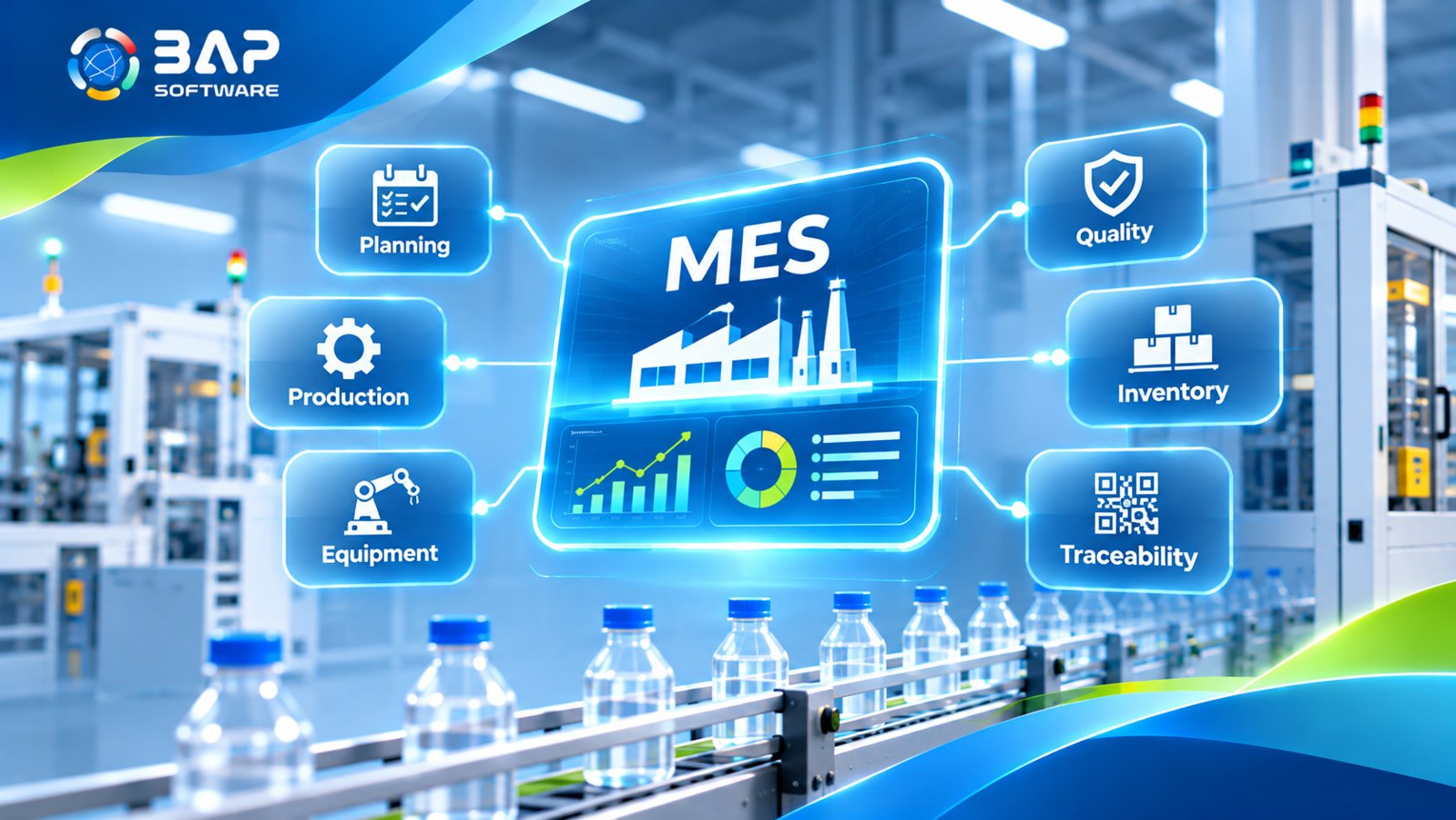
03. How Can MES Improve High-Mix, Low-Volume Manufacturing?
MES connects production instructions with actual shop-floor activities, helping manufacturers manage manufacturing information across different processes.
The following MES functions can be particularly useful in high-mix, low-volume environments.
| MES Function | Practical Application |
|---|---|
| Production Order Management | Share work instructions and order changes for individual products or production orders. |
| Production Progress Tracking | Monitor process status and completion for each product or manufacturing lot. |
| Production Performance Tracking | Record operating time, production quantities, and changeover duration. |
| Quality and Traceability Management | Record and trace inspection results and manufacturing conditions by product. |
Centralizing this information makes it easier to monitor shop-floor operations and compare planned production with actual results.
Production planning and scheduling optimization may be handled by ERP or Advanced Planning and Scheduling (APS) systems. MES primarily manages production instructions, shop-floor data collection, and process execution. These systems can be integrated when necessary.
04. When Does a High-Mix, Low-Volume Factory Need MES?
The decision to implement MES should not depend solely on the number of products a factory manufactures.
More important factors include the complexity of shop-floor management and how easily production information can be accessed.
MES may be worth considering when:
- Production instruction changes take too long to reach shop-floor operators.
- Production progress and actual results cannot be checked quickly for each product.
- Manufacturers need to analyze processing times and changeover durations.
- Quality records and manufacturing histories must be tracked by product or lot.
However, if production operations are relatively simple and existing tools already provide sufficient control, a full MES implementation may not be necessary.
Manufacturers can begin by improving reporting processes and data collection methods, then digitize specific operations where additional capabilities are needed.
05. BAP’s MES Development and Manufacturing DX Services
BAP supports manufacturers with operational analysis, MES design and development, ERP integration, and equipment data connectivity.
In a beverage manufacturing project in Vietnam, BAP developed an integrated manufacturing system connecting MES, Laboratory Information Management Systems (LIMS), Computerized Maintenance Management Systems (CMMS), ERP, and Business Intelligence (BI).
For a Japanese steel pipe manufacturer in Vietnam, BAP also conducted business analysis and MES system design. The project examined different production and management processes and defined requirements covering raw materials, production records, work-in-progress inventory, quality management, and traceability.
In high-mix, low-volume manufacturing, managing variations in products and processes is essential. BAP considers each factory’s existing workflows and systems to define the necessary functionality and implementation scope, providing MES solutions tailored to operational requirements.
Struggling to Manage High-Mix, Low-Volume Production?
From production progress tracking and performance management to existing system integration, BAP helps manufacturers develop MES and business systems tailored to their shop-floor challenges.
Conclusion
High-mix, low-volume manufacturing involves varying production processes and operating conditions, making production progress and performance management more complex.
MES provides a way to connect production instructions, process progress, actual manufacturing results, and quality information.
The goal should not be MES implementation itself, but identifying shop-floor challenges and improving operations step by step with the right system capabilities.