In 2026, AIOps and advanced operational technologies are reshaping how enterprises manage their IT systems. From cloud operations and zero-downtime maintenance to the convergence of DevOps and O&M, everything is moving toward one shared goal: optimize efficiency – reduce costs – enhance security. Let’s join BAP Software in reviewing 5 IT operations trends in 2026 that enterprises must grasp to stay ahead.
1. AIOps – Artificial Intelligence in IT Operations
Definition & Background
AIOps (Artificial Intelligence for IT Operations) is a concept introduced by Gartner in 2017, defined as: “Applying AI/ML and big data to automate the detection, analysis, and resolution of issues in IT operations.”
In the past, IT teams had to manually monitor millions of logs, events, and alerts from many different tools. Meanwhile, today’s systems have become extremely complex: cloud, microservices, IoT, containers, edge computing—all generating massive amounts of data (data noise) that humans can no longer process in time.
AIOps was created to solve three major problems:
Explosive growth of logs & events (data overload).
Slow incident resolution, leading to costly downtime.
The need for 24/7 operations with high availability.
How AIOps Works
AIOps typically combines Big Data Platforms + AI/ML Engines + Automation Tools:
Data collection: logs, metrics, alerts from servers, applications, and cloud services.
Analysis & noise reduction: AI groups similar events and removes false alerts.
Anomaly detection: AI/ML identifies abnormal patterns (e.g., unusual CPU spikes outside business hours).
Automated actions: automatically scale servers, restart services, or trigger ITSM playbooks (ServiceNow, Jira).
Learning & improvement: the longer it runs, the smarter AIOps becomes through machine learning.
Real-World Applications
Advanced log analysis: instead of manually reading logs, AIOps filters millions of lines to find the root cause.
Self-healing systems: for example, when server memory exceeds a threshold, the system automatically restarts containers without human intervention.
Capacity forecasting: analyze historical traffic to predict server demand during peak seasons (Black Friday, Lunar New Year).
User experience monitoring: detect slow performance for specific user groups before the entire system is affected.
Benefits
Reduce MTTR (Mean Time To Repair) by up to 70% thanks to automation.
Improve monitoring accuracy by filtering out “false alarms.”
Minimize downtime: many enterprises achieve near zero downtime.
Optimize workforce: IT teams shift from “firefighting” to strategic optimization.
Artificial Intelligence applied in system operations. Source: Open Source Foru
2. Cloud-first O&M – Multi-Platform, Hybrid, and Multi-Cloud Management
An Inevitable Trend
In the era of Industry 4.0, most global enterprises are adopting multi-cloud and hybrid cloud models.
According to the IDC 2024 report, more than 85% of enterprises consider multi-cloud management a mission-critical strategy. Key reasons include:
Avoiding vendor lock-in (dependence on a single provider).
Optimizing costs by choosing the most suitable cloud services.
Increasing flexibility and reliability by distributing workloads.
However, this also creates new O&M challenges: each cloud platform has its own operating model, tools, and security policies.
Cloud-first O&M Approach
Cloud-first O&M means building operation and maintenance systems with cloud as the core, then expanding to hybrid and multi-cloud environments.
Centralized monitoring: use one platform to manage AWS, Azure, and GCP simultaneously.
Dynamic resource management: apply auto-scaling and serverless to optimize performance.
End-to-end security: integrate IAM, encryption, and multi-factor authentication across all cloud environments.
DevOps + O&M synchronization: CI/CD pipelines run consistently across multiple clouds.
Common Applications & Services
Cloud Operations (CloudOps): monitor uptime, performance, and cloud costs.
Cloud Security O&M: ensure compliance with standards such as ISO 27001, GDPR, and NIST.
Cloud Migration & IT Outsourcing: outsource to cloud experts to optimize operations.
Key Benefits
Reduce downtime by 30–50% through centralized monitoring.
Optimize cloud spending (cut 20–35% of costs via auto-scaling and rightsizing).
Increase flexibility: easily scale as the business grows.
Enhance security & compliance: unified management of access rights and data across platforms.
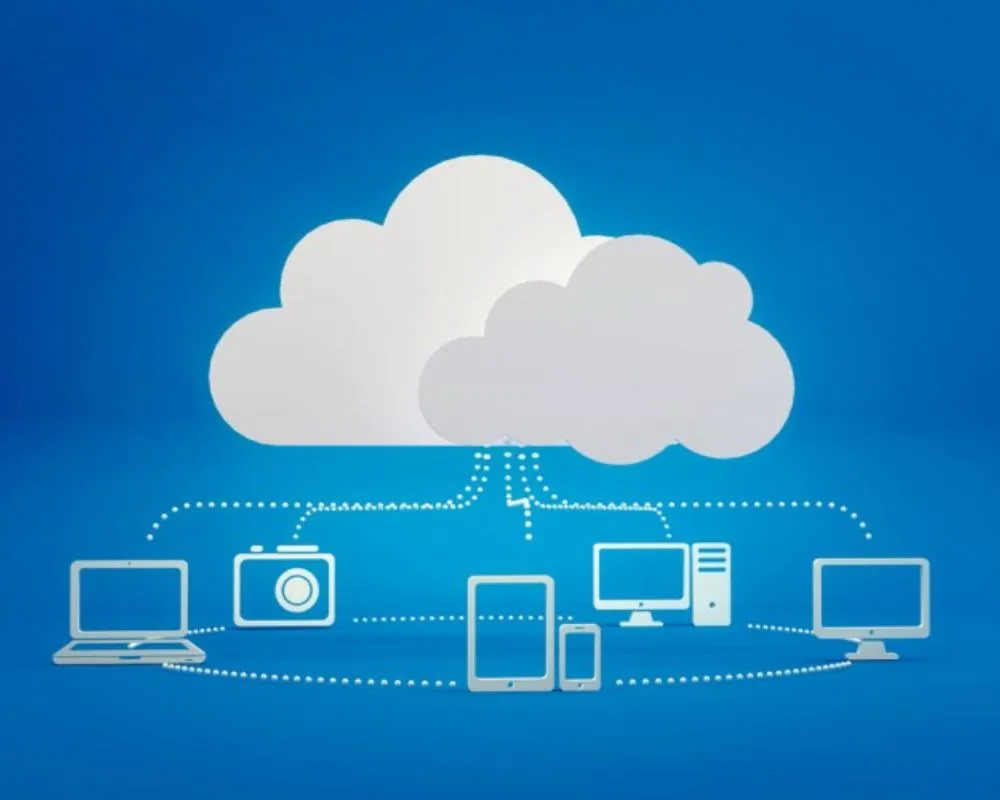
General information about Cloud-first O&M. Source: Kiot Việt
3. Zero-Downtime Maintenance – Non-Disruptive Maintenance
Context & Demand
In the digital era, downtime means lost revenue, damaged reputation, and poor customer experience.
One minute of downtime can cost USD 5,600 (Gartner 2024).
Industries such as finance, e-commerce, logistics, and healthcare can hardly tolerate any downtime.
Therefore, the trend of Zero-Downtime Maintenance (ZDM) is becoming increasingly important, aiming to perform maintenance while systems remain fully operational.
Technical Approaches
To achieve ZDM, enterprises apply multiple techniques:
Rolling Updates: update server clusters in cycles while other nodes remain active.
Blue-Green Deployment: run two environments (Blue & Green) in parallel. During updates, traffic is switched to the new environment without interruption.
Canary Release: release updates to a small group of users first, monitor feedback, then gradually expand.
Hot Patching: patch systems in real time without restarting services.
Load Balancing + Auto Failover: when one node is under maintenance, traffic is automatically redirected to other nodes.
Real-World Applications
E-commerce: Lazada, Shopee, and Amazon use blue-green deployment to upgrade systems while customers continue shopping normally.
Digital banking: core banking systems are updated via rolling updates so customers can transact 24/7.
Cloud services: AWS and Azure implement hot patching for security without forcing customer downtime.
Benefits
Avoid revenue loss caused by downtime.
Improve customer experience: services remain available 24/7.
Enhance brand reliability: enterprises demonstrate strong technical capability.
Support rapid development: DevOps teams can update continuously without disruption.

General information about Zero-downtime Maintenance. Source: DatoCMS
4. DevOps + O&M – Integrating Development and Operations
Context & Reasons for Integration
In the past, Dev (software development) and Ops (system operations) worked separately. This led to:
Delays in deployment (Dev delivers code, Ops spends time testing and deploying).
Conflicts: Dev wants rapid innovation, Ops wants stability.
DevOps was created to remove this boundary, combining CI/CD (Continuous Integration/Continuous Deployment) with O&M (Operations & Maintenance) to:
How DevOps Integrates with O&M
Infrastructure as Code (IaC): manage infrastructure (servers, networks) through code, making changes and maintenance easier.
Integrated monitoring: performance monitoring (APM – Application Performance Monitoring) is embedded directly into the DevOps pipeline.
Fast feedback loop: issues detected in operations are immediately reported back to the Dev team for quick fixes.
CI/CD + automated testing: ensure every update is tested and deployed quickly, reducing risks.
Real-World Applications
Fintech: mobile banking apps update frequently (2–3 times per week) while remaining stable thanks to DevOps + O&M.
Retail/E-commerce: Shopee and Tiki use CI/CD for fast A/B testing and automatic rollback if issues occur.
Smart manufacturing: factories using IoT and cloud allow DevOps teams to deploy new features in parallel while O&M ensures system stability.
Benefits
Faster deployment: from weeks/months → hours/days.
Reduced risk: automatic rollback when updates fail.
Better internal collaboration: Dev + Ops share common goals (stability & speed).
Toward zero downtime: when DevOps and O&M work closely, systems rarely need to stop.
General information about DevOps + O&M. Source: LinkedIn
5. Security-Driven O&M – Security Embedded in Operations
Context & Challenges
Cyberattacks are at a record high: According to IBM 2024, the average time to detect a data breach is 204 days, causing an average loss of USD 4.45 million per incident.
The more enterprises rely on cloud, AI, and IoT, the higher the cybersecurity risks.
Regulations such as GDPR, NIST Cybersecurity Framework, and ISO 27001 are becoming stricter, forcing companies to embed security into every O&M stage.
Principles of Security-Driven O&M
Unlike traditional approaches (only securing at the firewall layer or at the end of the lifecycle), Security-Driven O&M integrates security throughout the entire operations process:
Zero Trust Architecture: never automatically trust any connection; always authenticate and apply dynamic authorization.
Continuous Monitoring: real-time monitoring of logs, network traffic, and abnormal behavior.
Patch & Vulnerability Management: continuous security patching (even hot patching to avoid downtime).
DevSecOps: integrate security testing directly into the CI/CD pipeline.
Compliance by Design: systems are designed from the start to comply with ISO 27001, SOC 2, PCI DSS, etc.
Real-World Applications
Banking & Fintech: apply continuous monitoring to instantly detect abnormal transactions.
E-commerce: integrate AI-based anomaly detection in O&M to prevent botnets and DDoS attacks.
Healthcare: DevSecOps ensures cloud-based medical applications always comply with HIPAA.
Benefits
Minimize risks of cyberattacks and data breaches.
Ensure legal and international standard compliance.
Protect customer trust and brand reputation.
Save long-term costs: prevention costs are often <10% of post-breach recovery costs.
General information about Security-driven O&M. Source: Powered by Telemark
6. BAP Software – A Trusted O&M Partner in 2026
Technology Capabilities
BAP Software combines advanced technologies to deliver comprehensive O&M services:
AIOps: using machine learning to analyze logs and predict incidents before they happen.
Cloud Operations: supporting multi-platform management (AWS, Azure, GCP, Hybrid, On-Premise).
Zero-Downtime Maintenance: applying rolling updates and blue-green deployment for non-disruptive maintenance.
DevOps + SecOps: CI/CD integrated with security, automating from development to operations.
Security-Driven O&M: complying with ISO 27001 and embedding data security by design.
O&M Services at BAP
System Operations: 24/7 monitoring, incident management, performance optimization.
IT Maintenance Services: periodic maintenance and zero-downtime incident resolution.
Cloud O&M: managing hybrid and multi-cloud systems with optimized costs.
IT Outsourcing: providing on-demand operations and maintenance engineers.
International Implementation Experience
BAP has partnered with enterprises in Japan, Singapore, Vietnam, South Korea, and more, across industries such as:
Fintech: managing digital banking systems with 99.99% uptime.
E-commerce: implementing zero-downtime maintenance for large shopping platforms.
Manufacturing: applying AIOps for predictive maintenance in production lines.
Process & Commitment
Agile + DevOps: flexible and fast implementation.
ISO 27001: ensuring international security standards.
Clear SLA (Service Level Agreement): committed uptime and response times.
BAP Software – A trusted partner for implementing O&M services.
Conclusion
In 2026, Operations & Maintenance (O&M) will no longer be just a “back-office” function, but a strategic foundation that helps enterprises sustain growth, security, and innovation.
The five key trends include:
AIOps to automate operations and reduce downtime.
Cloud-first O&M to efficiently manage hybrid and multi-cloud systems.
Zero-Downtime Maintenance to deliver seamless user experiences.
DevOps + O&M to shorten development and deployment cycles.
Security-Driven O&M to protect data and corporate reputation.
With strong capabilities in AI, Cloud, DevOps and Security, extensive experience across Japan – Singapore – Vietnam, and processes aligned with Agile + ISO 27001, BAP Software is an ideal partner for your modern O&M strategy.
Contact BAP Software today for a tailored O&M Services roadmap—helping your systems stay stable, secure, and cost-optimized.