Unexpected equipment failures and downtime can disrupt production schedules and increase maintenance costs. To reduce these risks, manufacturers increasingly focus on preventive maintenance and predictive maintenance.
The key difference between preventive and predictive maintenance is how maintenance activities are scheduled. Preventive maintenance follows predefined intervals or equipment usage, while predictive maintenance analyzes equipment condition data to identify potential problems and determine when maintenance may be needed.

01. Preventive vs. Predictive Maintenance: Key Differences
Preventive maintenance involves scheduled inspections and component replacements based on time or operating hours. Predictive maintenance uses equipment data, such as vibration, temperature, and electrical current, to monitor equipment conditions and detect early signs of abnormalities.
| Comparison | Preventive Maintenance | Predictive Maintenance |
|---|---|---|
| Maintenance Trigger | Scheduled intervals or operating hours | Equipment condition and abnormal trends |
| Required Data | Inspection and replacement records | Vibration, temperature, current, etc. |
| Main Benefit | Easier maintenance planning | Condition-based maintenance decisions |
| Main Challenge | Potentially unnecessary inspections or replacements | Requires reliable data collection and analysis |
Rather than choosing one approach for every machine, manufacturers should select maintenance strategies based on equipment criticality and the potential impact of failures.
02. Common Equipment Maintenance Challenges in Manufacturing
Factories that rely on paper records or Excel spreadsheets for maintenance management often face several challenges:
- Inspection and repair histories are scattered across multiple files.
- Equipment condition assessments depend heavily on experienced personnel.
- Real-time equipment conditions are difficult to monitor.
- Maintenance records are not connected to production performance or downtime data.
Addressing these challenges requires centralized maintenance information and better use of equipment data.
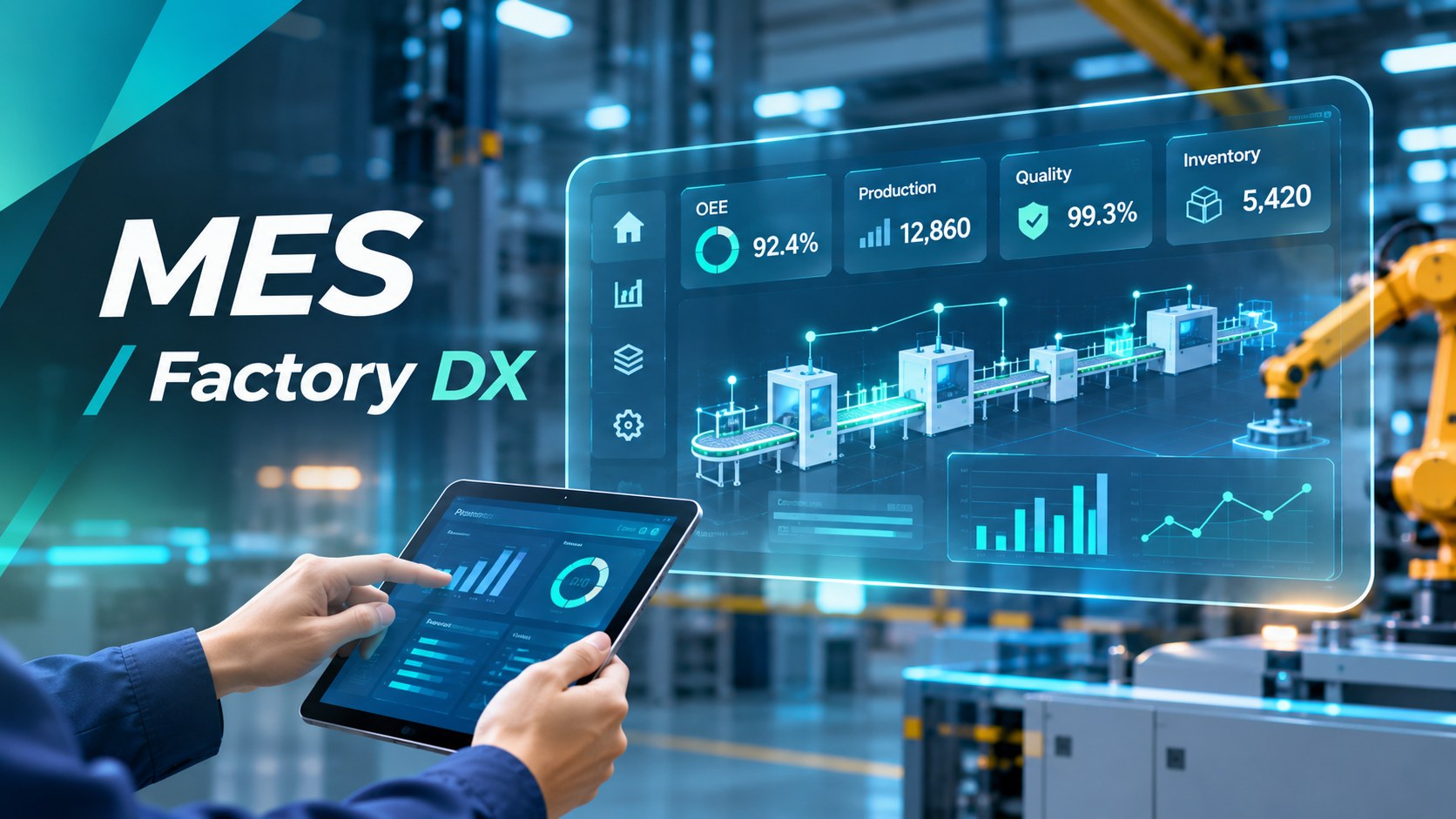
03. How MES and IoT Improve Equipment Maintenance
IoT sensors and PLCs can collect equipment data, including vibration, temperature, and operating status. These data help maintenance teams identify abnormal trends and understand equipment downtime patterns.
By integrating a Manufacturing Execution System (MES) with a Computerized Maintenance Management System (CMMS), manufacturers can connect production records, equipment downtime, and maintenance histories.
For example, when an equipment monitoring system detects an abnormal condition, maintenance teams can manage inspection activities through CMMS while using MES data to assess the potential impact on production.
Predictive maintenance does not always require artificial intelligence. Manufacturers can start with equipment data collection and threshold-based monitoring, then introduce advanced analytics when necessary.
04. BAP’s MES and Manufacturing DX Solutions
BAP supports manufacturers in Japan and Vietnam through MES development, manufacturing data integration, and connectivity with existing enterprise systems.
For a beverage manufacturing plant in Vietnam, BAP developed an integrated manufacturing management system connecting MES, LIMS, CMMS, ERP, and BI.
For a Japanese steel pipe manufacturer operating in Vietnam, BAP conducted business process assessments and MES system design covering production processes, quality, inventory, and equipment information.
From equipment data collection to MES and CMMS integration, BAP provides software development solutions tailored to each factory’s operational environment.
Planning to Digitalize Your Equipment Maintenance?
From replacing paper-based and Excel maintenance records to equipment monitoring and MES integration, BAP helps manufacturers improve data visibility and streamline operations.
Conclusion
Preventive maintenance relies on scheduled inspections and operating hours, while predictive maintenance uses equipment condition data to guide maintenance decisions.
By selecting the right approach for each machine and integrating MES, IoT, and CMMS, manufacturers can improve equipment reliability, connect maintenance and production information, and support continuous operational improvement.