In today’s highly competitive market, AR/XR and the Metaverse are no longer merely entertainment technologies—they have become strategic levers that help logistics enterprises optimize operations while enhancing customer experience. From warehouse visualization and supply chain simulation to creating interactive virtual shopping environments, these technologies are unlocking unprecedented opportunities for growth and customer retention.
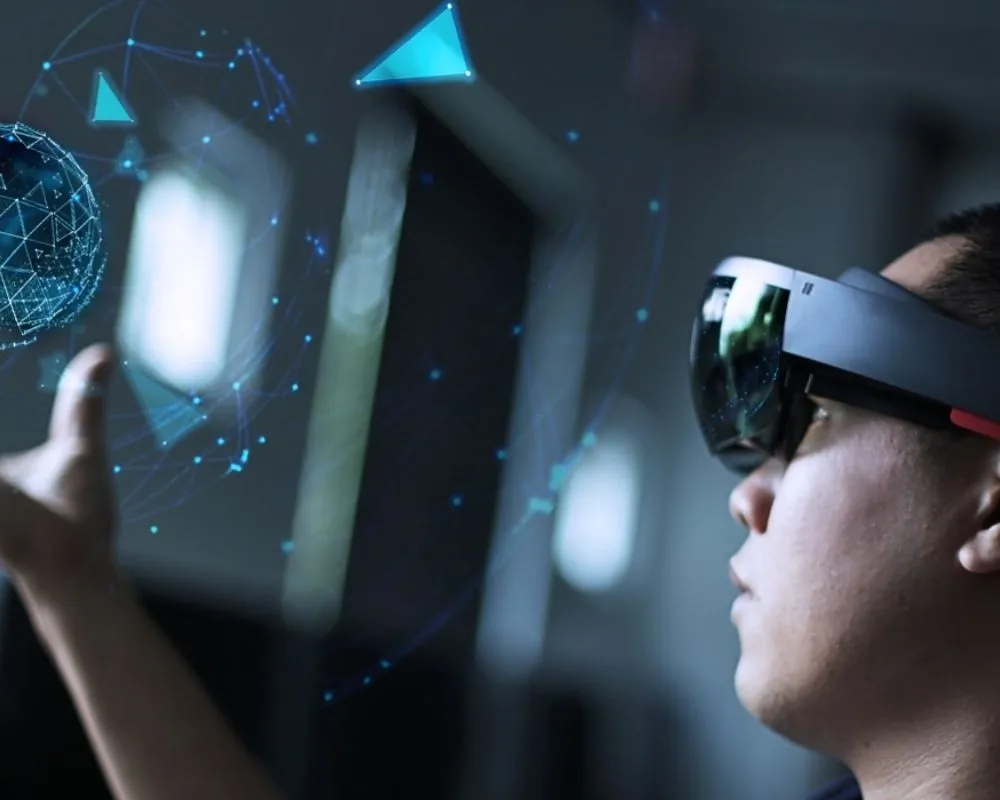
Applying AR/XR and Metaverse technologies to enterprises. Source: Oulu
1. Market Context and Technology Trends
In recent years, augmented reality (AR), extended reality (XR), and the Metaverse have advanced at a rapid pace. These technologies are no longer limited to entertainment or gaming—they are increasingly becoming strategic tools for business operations and commercial activities. According to reports from Gartner and PwC, the global AR/XR market is expected to reach hundreds of billions of USD in the coming decade, with a compound annual growth rate (CAGR) exceeding 25%.
This acceleration is driven by three core factors:
- Technological infrastructure advancements – the widespread adoption of powerful mobile devices, AR/XR headsets, IoT sensors, and 5G/6G networks.
- Demand for operational digitization – enterprises seek ways to simulate, predict, and optimize processes in a safe and cost-efficient environment.
- Shifts in user behavior – modern consumers expect personalized, interactive, and instantaneous experiences.
The impact of this technology wave is most evident in traditional industries such as logistics and retail:
In logistics, AR/XR enables 3D warehouse visualization, guided loading and unloading, remote workforce training, and intuitive supply chain management.
In retail, the Metaverse introduces “virtual stores” where customers can try, compare, and purchase products without visiting a physical location, while helping brands build global communities.
At a strategic level, this trend signifies an important shift: businesses are not only digitizing their operational systems but also redefining how they engage with customers and deliver value. In an increasingly competitive global market, the ability to integrate AR/XR and the Metaverse into operations will be a critical differentiator for customer retention, operational efficiency, and cost optimization.
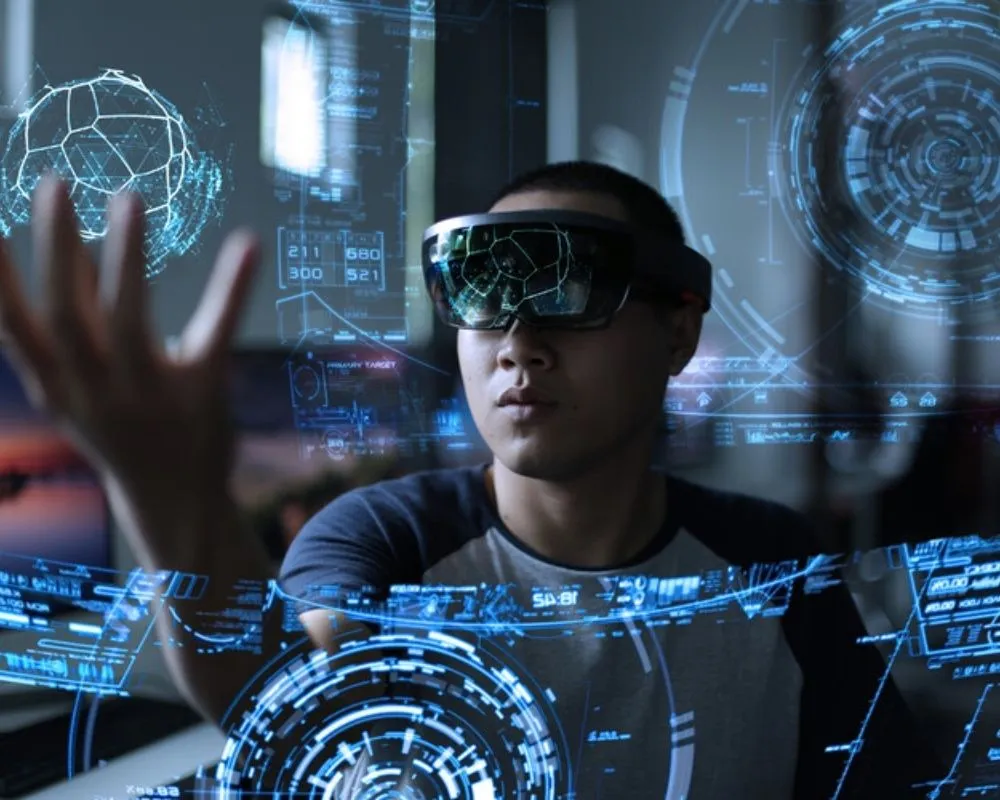
Current technological landscape and trends for enterprises. Source: adsttc
2. What Are AR/XR and the Metaverse?
2.1. AR (Augmented Reality)
AR is a technology that overlays digital information (3D objects, text, sensor data, etc.) onto the real world through devices such as smartphones, tablets, or AR glasses (e.g., Microsoft HoloLens, Magic Leap).
How it works: AR uses cameras and sensors to detect the real-world environment, then software processes this data and displays virtual content synchronized with the surrounding space.
Application examples:
In logistics: displaying pick-up instructions and locating items within a warehouse.
In retail: enabling customers to “try” products at home via mobile devices (e.g., eyewear, furniture, clothing).
2.2. XR (Extended Reality)
XR is an umbrella term covering all technologies that blend the physical and digital worlds, including:
AR (Augmented Reality)
VR (Virtual Reality): a fully virtual environment where users interact via VR headsets and controllers.
MR (Mixed Reality): a combination of AR and VR, where virtual objects can interact with real-world elements in real time.
XR is regarded as a technology ecosystem that allows enterprises to implement multiple use cases depending on their objectives—from training, monitoring, and simulation to customer experience enhancement.
2.3. Metaverse
The Metaverse refers to a persistent 3D virtual space that enables users to interact with one another and with digital objects in real time.
Unlike AR/XR, which focus on individual device-based experiences, the Metaverse is a connected platform where multiple users coexist and engage within the same virtual environment.
The Metaverse is often built on XR, AI, blockchain, and advanced graphics technologies.
Common applications: virtual stores, online trade fairs, training centers, factory simulations, and virtual workspaces.
2.4. Differences and Relationships Between AR/XR and the Metaverse
Differences:
AR/XR are technologies (or sets of technologies) focused on visualizing and interacting with digital content.
The Metaverse is a virtual environment/platform where XR (along with other technologies) is applied to create immersive, multi-user experiences.
Relationship:
AR/XR serves as the technological gateway that enables users to enter and interact within the Metaverse. In other words, the Metaverse cannot be fully realized without XR technologies that support immersive visualization and interaction.
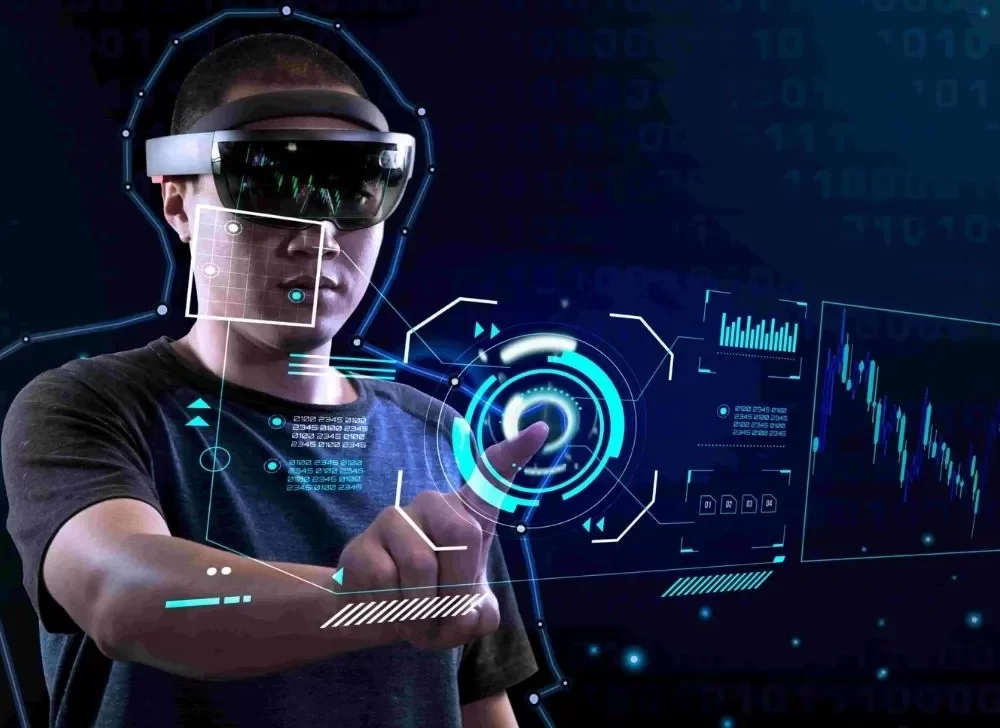
What are VR/AR and Metaverse technologies? Source: ncube
3. Applications of AR/XR and the Metaverse in the Logistics Industry
3.1. Warehouse Simulation and Optimization (Warehouse Visualization)
AR/XR enables businesses to build 3D warehouse models containing complete data on item locations, quantities, and status.
Benefits:
Helps managers analyze movement flows, optimize storage space, and reduce congestion.
Example:
Using AR glasses to view real-time warehouse layouts and highlight items that need to be picked or replenished.
3.2. Virtual Training for Operational Staff
With XR or the Metaverse, enterprises can create virtual warehouse environments where new employees can practice safety procedures, equipment operation, or emergency handling without disrupting actual operations.
Benefits:
Reduces real-world training costs, minimizes risks during onboarding, and accelerates learning speed.
3.3. AR-Based Maintenance and Repair Guidance
Technicians can wear AR glasses to view step-by-step maintenance instructions directly on the equipment—such as component diagrams, disassembly procedures, or hazard alerts.
Benefits:
Shortens repair time, reduces technical errors, and facilitates remote support through real-time image sharing with off-site experts.
3.4. Interactive 3D Tracking of Shipments and the Supply Chain
By combining AR/XR with data from IoT and logistics management systems, businesses can visualize the entire supply chain through an interactive 3D model—from the point of origin, through distribution centers, to the final delivery point.
Benefits:
Enhances end-to-end visibility, helps detect issues or delays more quickly, and supports more accurate dispatching decisions.
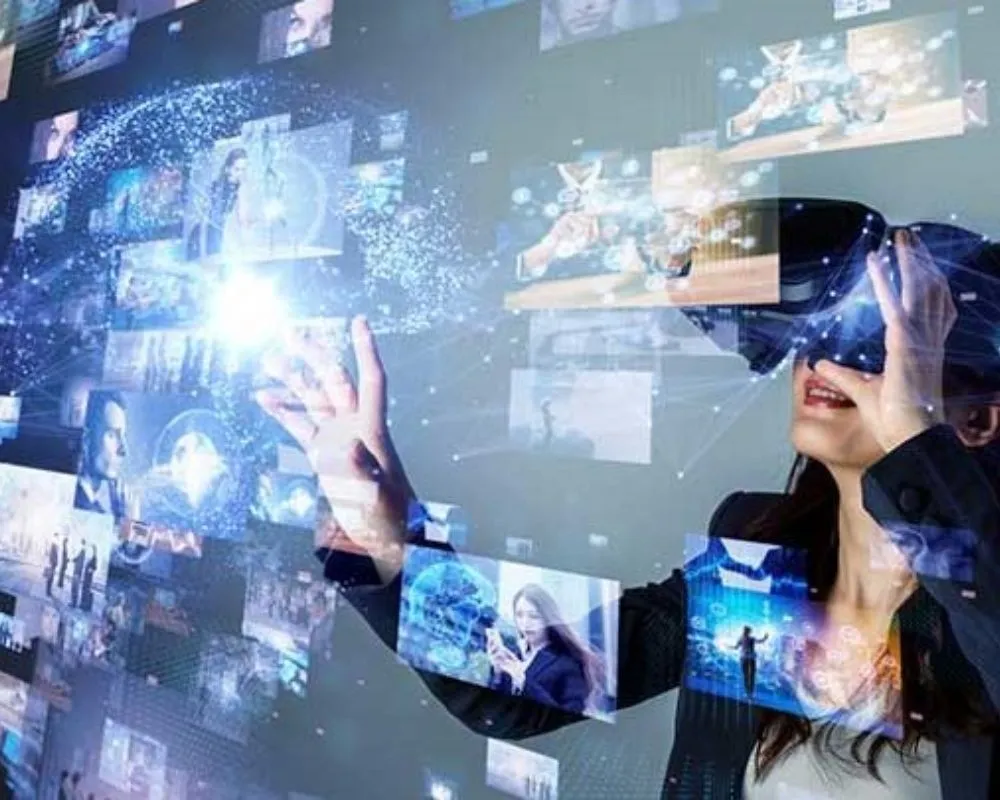
Applications of VR/AR and Metaverse technologies in the logistics industry. Source: APB
4. Applications of AR/XR and the Metaverse in Enhancing Customer Experience
4.1. Product Try-On and Visualization with AR
AR enables customers to preview products in their real environment—for example, placing a virtual sofa in the living room to check size and color compatibility, or trying on sunglasses directly through a smartphone camera.
Benefits:
Reduces return rates and increases purchase confidence.
4.2. Immersive Virtual Stores in the Metaverse
In the Metaverse, brands can create immersive 3D virtual stores where customers use avatars to explore, try products, and interact with virtual sales assistants.
Benefits:
Provides a novel shopping experience, recreates the feeling of “going shopping” at home, and attracts Gen Z and Alpha consumers.
4.3. Virtual After-Sales Support and Technical Assistance
With AR/XR, customers can receive real-time, visual instructions for device setup, troubleshooting, or repairs instead of relying solely on printed manuals.
Example:
An electronics company offers an AR app that scans a device and highlights components that need cleaning or replacement.
Benefits: Improves customer satisfaction and strengthens brand loyalty.
4.4. Personalized Experiences for Each Customer
By combining AR/XR with customer data, brands can customize products or shopping recommendations based on individual preferences and purchase history.
Example:
A fashion AR app suggests outfits optimized for the customer’s skin tone, body shape, and style.
Benefits: Increases conversion rates and boosts average order value (AOV).
Benefits of applying VR/AR and Metaverse technologies in customer service. Source: Arpost
5. Benefits of Implementing AR/XR and the Metaverse
5.1. Optimizing Logistics Operational Costs
Implementing AR/XR in logistics processes enables businesses to simulate entire warehouses and cargo flows in a 3D environment. This allows managers to predict bottlenecks, optimize storage layouts, and allocate manpower more effectively during the planning stage.
AR also helps staff quickly identify item locations through visual overlays on mobile devices or smart glasses, significantly reducing the time spent on searching and order processing.
By minimizing errors, reducing resource waste, and shortening handling and transportation times, companies can achieve substantial operational cost savings.
5.2. Improving Training Efficiency and Reducing Risks
AR/XR provides immersive virtual training environments that simulate a full range of operational or retail scenarios—from order processing and equipment maintenance to customer interaction.
Employees can practice repeatedly without impacting real-world operations, leading to shorter training cycles and improved skill mastery.
Additionally, training within simulated environments helps reduce workplace accidents and equipment damage, making it especially valuable for large warehouses or complex production lines.
5.3. Increasing Conversion Rates and Customer Retention
AR/XR and the Metaverse enable customers to experience products or services within their personal context before making a purchase. For example, customers can use AR to place a virtual furniture item in their living room, or enter a Metaverse store to view products in 360 degrees and interact with virtual support staff.
These immersive experiences boost excitement and trust, leading to higher purchase intent. They also foster long-term loyalty as customers feel understood and personally catered to by the brand.
5.4. Strengthening Competitive Differentiation and Brand Value
In an increasingly saturated market, adopting emerging technologies like AR/XR and the Metaverse positions companies as innovation leaders.
This not only attracts tech-savvy consumers but also enhances credibility among investors and business partners. Brands that pioneer these technologies are often perceived as forward-thinking and creative, thereby increasing brand value and establishing long-term competitive advantages.
Benefits of adopting AR/VR and Metaverse technologies for enterprises. Source: weetechsolution
6. Challenges & Risks
6.1. High Initial Investment Costs
To implement AR/XR and Metaverse solutions, businesses must invest in hardware (AR/VR headsets, sensors), simulation software, content management platforms, and specialized development teams. These costs can be significant, especially for small and medium-sized enterprises.
Additionally, ongoing maintenance, technology upgrades, and content updates require continuous financial resources.
6.2. Technical Infrastructure Requirements and Data Security
AR/XR and Metaverse technologies require high-speed network connectivity, large bandwidth, and robust cloud infrastructure to process 3D data and real-time video streams.
Moreover, collecting and processing user data—including personal information and interaction behavior—presents major challenges related to cybersecurity and compliance with standards such as ISO 27001 and GDPR.
Without strong security strategies, businesses are vulnerable to data breaches and cyberattacks.
6.3. Workforce Adaptability
AR/XR and the Metaverse are still new to many employees in logistics and retail. Adapting to virtual interfaces, interacting within 3D environments, or collaborating remotely through Metaverse platforms requires training and behavioral adjustment.
Without proper learning programs, technology adoption may be limited, and the return on investment may fall short of expectations.
6.4. Standardization and System Compatibility Issues
Currently, AR/XR and Metaverse platforms lack unified standards for data formats, communication protocols, and integration APIs. This creates challenges when connecting new technologies with existing enterprise systems (ERP, WMS, CRM) or when deploying solutions across different device types.
If compatibility is not managed effectively, projects may face delays or incur high integration costs.
Challenges and risks when implementing VR/AR and Metaverse. Source: SMU
7. Solutions from BAP Software
7.1. Technological Capabilities
BAP Software possesses comprehensive expertise across the core technologies that enable AR/XR and Metaverse solutions:
AR/XR: Development of augmented reality and extended reality applications featuring highly visual simulations and seamless interaction.
AI & Machine Learning: Integration of image recognition, real-time data analytics, and personalized customer experiences.
IoT: Connectivity with sensors, operational devices, and logistics monitoring systems to synchronize real-world data into virtual environments.
Big Data & Cloud: Processing large-scale datasets while ensuring performance, stability, and scalability for Metaverse operations.
7.2. End-to-End Implementation Services
BAP provides a complete service suite—from consulting and design to development and system integration—enabling businesses to deploy AR/XR and Metaverse solutions tailored to their specific needs:
Strategic Consulting: Analyze operational challenges and customer experience goals to define the most suitable solution.
Design & Development: Build 3D models, interaction systems, and AR/XR technology components.
System Integration: Connect solutions with ERP, WMS, CRM, or enterprise data platforms to ensure end-to-end operational synchronization.
7.3. Proven International Experience
BAP has delivered numerous AR/XR and Metaverse projects for clients in Japan, Singapore, and Vietnam, spanning logistics, manufacturing, and retail. These projects focus on optimizing operations, improving training efficiency, and delivering differentiated customer experiences.
7.4. Quality Assurance and Security Framework
All projects at BAP follow an Agile development process to ensure flexibility and rapid delivery, combined with DevOps practices for automated deployment and monitoring. BAP strictly adheres to ISO 27001 standards to protect data and ensure system security, giving clients confidence when scaling their solutions.

BAP’s solutions for implementing AR/VR and Metaverse technologies.
Conclusion
AR/XR and the Metaverse are no longer futuristic concepts—they are rapidly becoming strategic technologies that optimize logistics operations and elevate customer experience. In the 2025+ landscape, businesses that adopt early will gain a significant competitive advantage, from reducing operational costs and improving training efficiency to increasing customer retention.
Starting experimentation and deployment now enables enterprises to shorten the learning curve, build internal technological capabilities, and prepare for large-scale implementation as market demands grow.
With extensive experience delivering AR/XR and Metaverse solutions for global clients, along with a comprehensive technology stack and internationally certified security processes, BAP Software is ready to accompany your business on this digital transformation journey.
Contact BAP Software today for tailored AR/XR and Metaverse solutions that fit your needs!